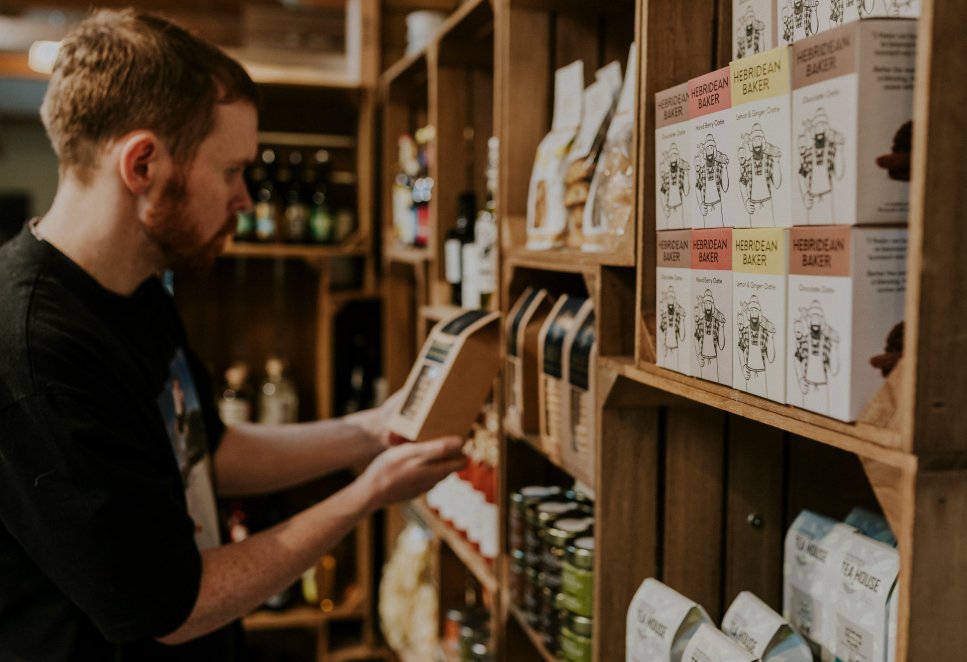
A CLOSER LOOK AT BEREMEAL
People tend to think carefully about cheese, coffee or wine — but flour and grain are often treated as an afterthought. The reality is that they shape flavour just as much.
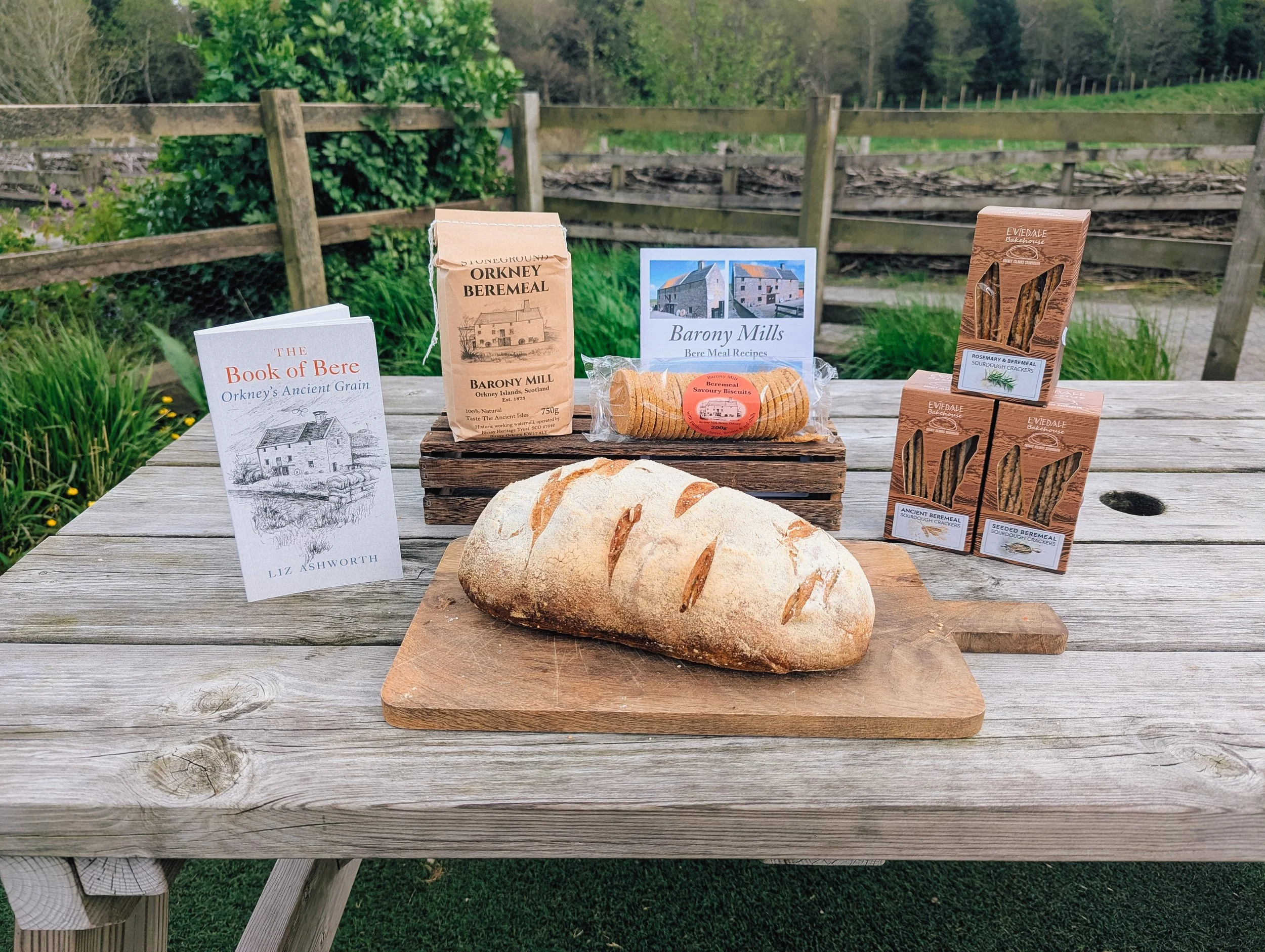
We have recently added a small beremeal and flour range to the shelves at the Barn, bringing together products from Orkney’s Barony Mill, Eviedale Bakehouse in Rendall, Orkney, and East Lothian millers Mungoswells.
Beremeal is one of Scotland’s oldest surviving grains — a type of ancient barley traditionally grown in Orkney, where the cool northern climate and long daylight hours suit it particularly well. Unlike many modern grains bred for high yields and uniformity, bere has remained largely unchanged over centuries. It grows quickly, has a distinctive nutty flavour, and produces flour with a soft, almost slightly sweet character that works beautifully in baking.
Traditionally, beremeal was used in bannocks, biscuits and breads across northern Scotland and the islands, but today it remains relatively rare, produced on a much smaller scale than modern commercial grains.
Alongside stoneground beremeal flour from Barony Mill, we are now stocking Eviedale Bakehouse crackers in a selection of flavours including rosemary & beremeal, ancient beremeal and seeded beremeal — all particularly good with farmhouse cheese.
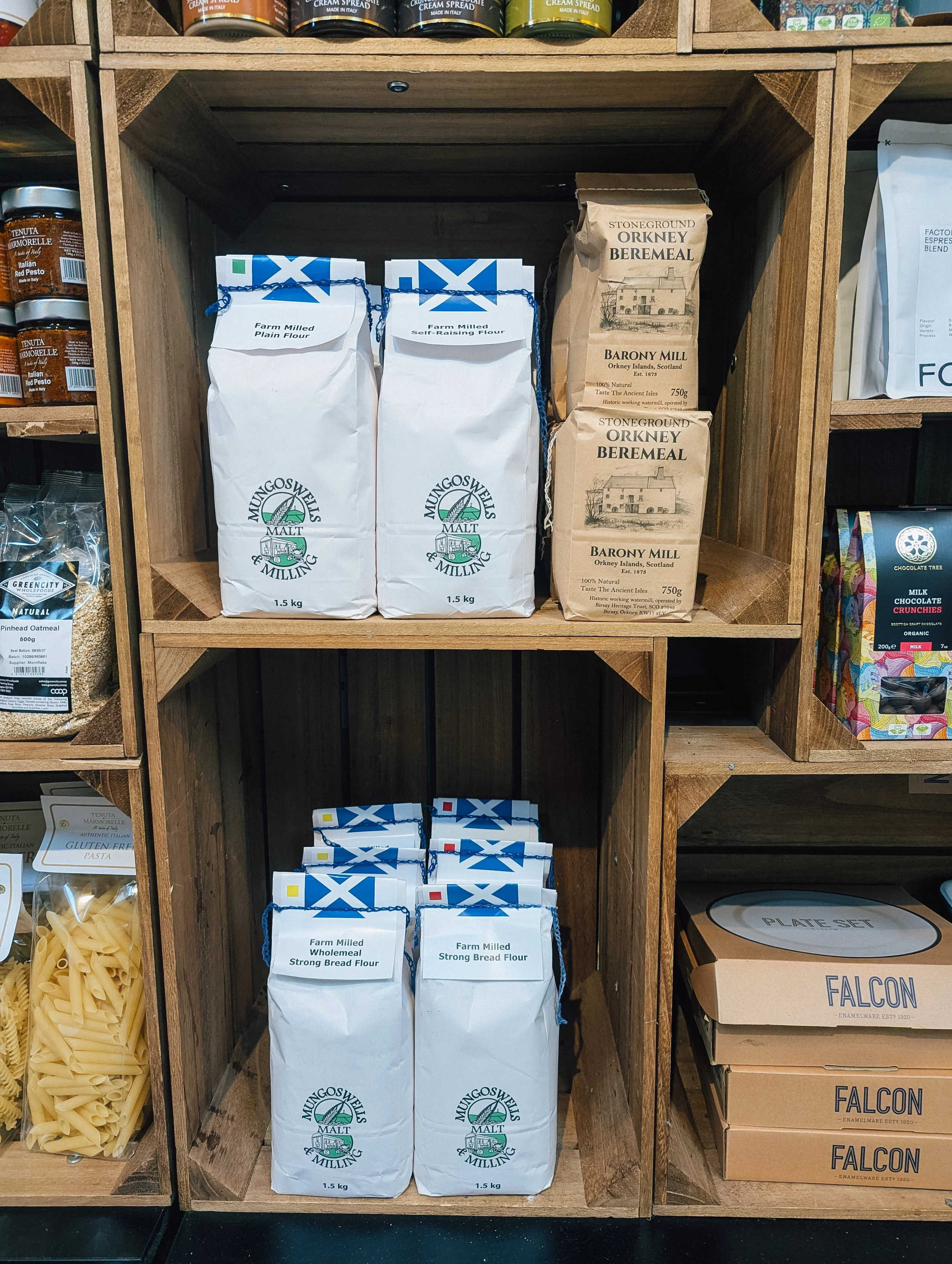
We also have Mungoswells flour back on the shelves, including plain, bread, wholemeal bread and self-raising flours. Produced in East Lothian using carefully selected wheat, the flours are widely used by bakers who care about flavour, texture and consistency.
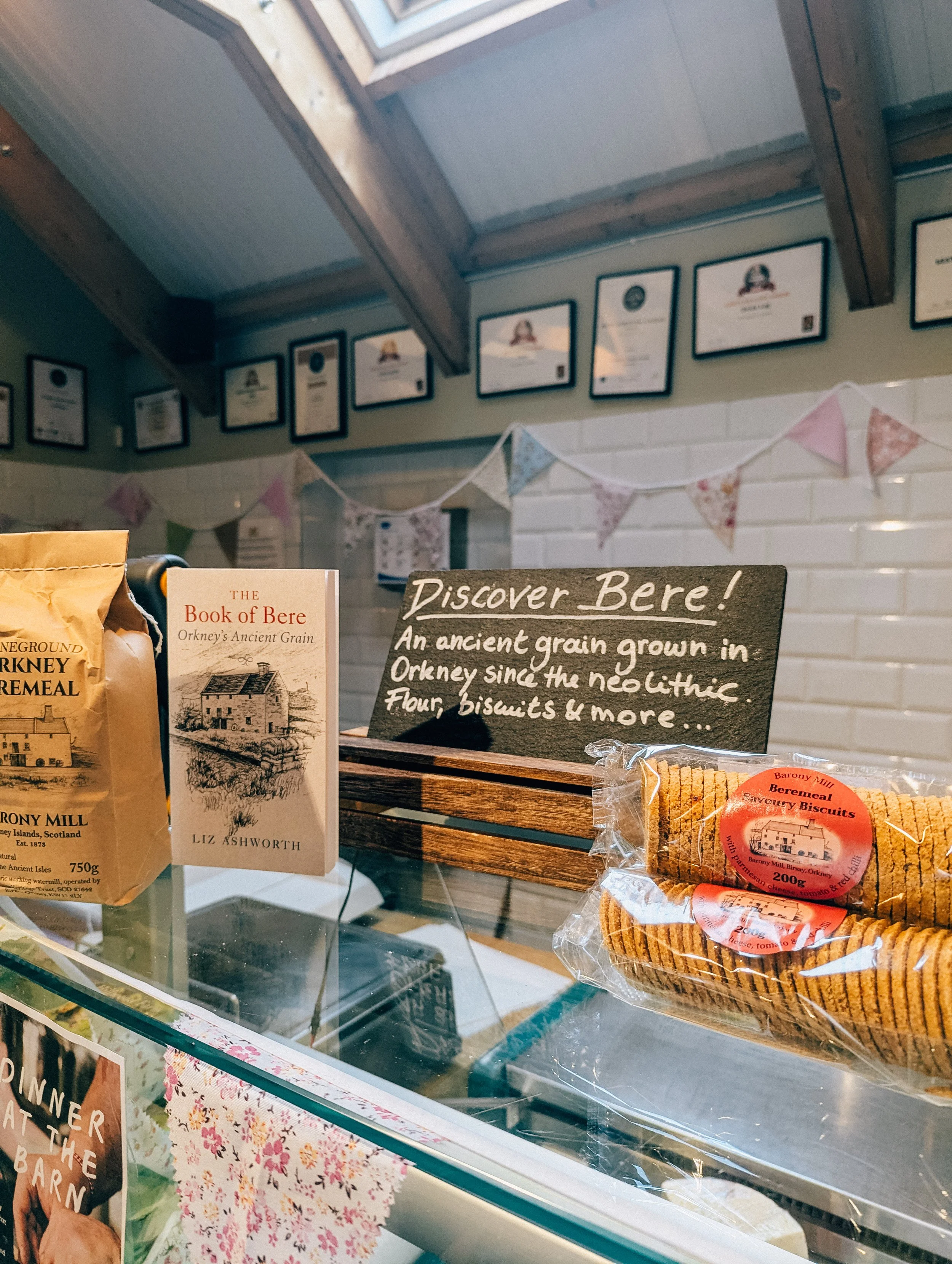
For anyone interested in baking at home, we also have The Book of Bere by Liz Ashmore alongside Barony Mill’s own recipe book, both offering a closer look at this remarkable grain and the traditions around it.
It is a small range, but one we are very pleased to have in the shop — thoughtful ingredients with a strong connection to Scottish farming, flavour and food traditions.